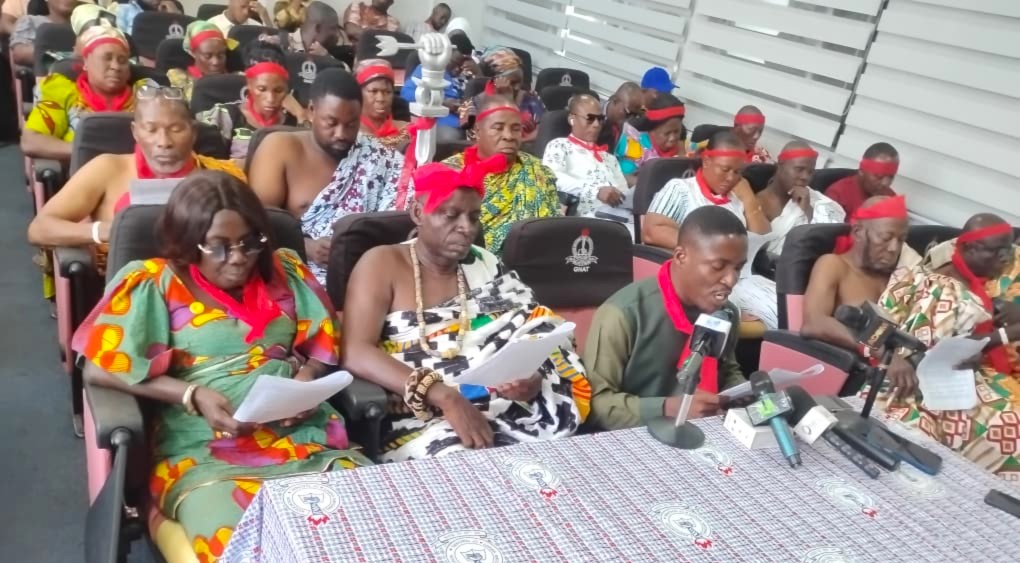
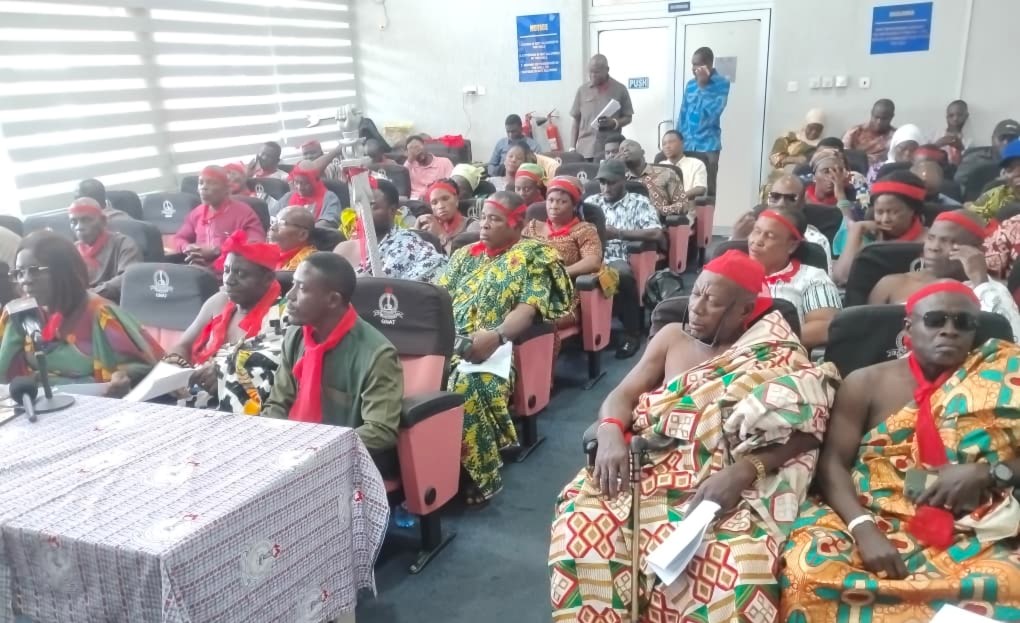
We, men and women working in Ghana’s artisanal fisheries; including chief fishermen, canoe owners, fishing crews, fish processors and traders express our gratitude to His Excellency the President for his decision to suspend the offshore gold exploration activities of Gold Coast GRC Ghana Ltd.
While we welcome this suspension, we remain deeply concerned about the reported ten offshore reconnaissance licenses covering approximately 10,000 square kilometres of Ghana’s marine waters. We are particularly troubled that artisanal fishing communities, whose livelihoods stand to be directly affected, were not adequately consulted before these activities were initiated.
We have taken note of the serious concerns raised by the Fisheries Commission, scientists and civil society organizations regarding the potential impacts of offshore gold exploration and, should it proceed, exploitation. These concerns demand urgent attention and decisive action.
We therefore call on His Excellency the President and the Government of Ghana to go beyond suspending these activities and take the necessary steps to revoke the licenses and abandon plans for offshore gold exploration and exploitation in Ghana’s coastal waters.
OUR OCEAN IS NOT A LIQUID DESERT
Our ocean is not a liquid desert waiting to be exploited. It is a living ecosystem that sustains fishing families, fish processors, traders and coastal communities whose livelihoods, food security and cultural heritage depend on healthy fish stocks and productive marine ecosystems.
For generations, our communities have depended on the sea for food, employment and survival. Our fishing grounds are not simply places where we work; they are a living inheritance that we have a responsibility to protect and pass on to future generations.
Activities that damage marine habitats, disrupt fish populations or restrict access to fishing grounds risk turning a living ocean into a liquid desert depleted of fish, stripped of its biodiversity and unable to sustain the communities that have depended on it for generations.
We cannot accept a future in which our children inherit the consequences of decisions made today at the expense of their livelihoods and their right to a healthy, productive ocean. The ocean must remain alive and productive, sustaining both marine biodiversity and the people whose lives depend on it.
PROTECT THE GAINS WE HAVE FOUGHT FOR
After years of advocacy for stronger protection of small-scale fisheries, Ghana’s Fisheries and Aquaculture Act, 2025 (Act 1146), extended the Inshore Exclusion Zone (IEZ) from six to twelve nautical miles offshore. This provides a stronger legal basis for protecting artisanal fishing grounds and the marine ecosystems on which fish stocks and fishing livelihoods depend.
We ask a fundamental question: what is the value of this hard-won protection if the same waters are opened to activities that could damage critical marine habitats, threaten fish stocks or displace artisanal fishers from their traditional fishing grounds?
We are also concerned about the potential implications for the Greater Cape Three Points Marine Protected Area, given concerns that the licensed areas may overlap with or affect this ecologically important area. The precise relationship between the licensed areas and the Marine Protected Area must be established transparently. Any activity that threatens this area could undermine conservation efforts and jeopardize the long-term sustainability of local fisheries.
The expansion of the IEZ must translate into meaningful protection on the water, not remain a provision on paper. We call on the Government to ensure that the purpose of this protection is not undermined by offshore mineral exploration or exploitation.
OUR LIVELIHOODS AND FOOD SECURITY MUST COME FIRST
We recognise Ghana’s need for investment, job creation and public revenue. However, economic development must not come at the expense of the ocean and the millions of people who depend on it.
Artisanal fisheries provide employment, sustain coastal economies and contribute significantly to the food and nutrition security of Ghanaians. The potential consequences of offshore gold exploration and exploitation extend far beyond the fishing communities closest to the proposed activities. They include declining fish catches, losses to women’s fish-processing and trading businesses, reduced access to affordable fish, the erosion of community knowledge and the disruption of livelihoods passed down from one generation to the next.
Promised mining jobs, financial compensation or short-term economic gains cannot replace healthy marine ecosystems, sustainable fish stocks or the social and economic value of thriving fishing communities. Nor can compensation necessarily restore an ecosystem once it has been irreversibly damaged.
A healthy ocean is a long-term investment in Ghana’s food security, employment, coastal resilience and future prosperity. It must not be sacrificed for short-term gains from offshore gold exploration and exploitation.
HONOUR GHANA’S COMMITMENTS TO SUSTAINABLE DEVELOPMENT AND BIODIVERSITY
We remind the Government of Ghana of its commitments to Sustainable Development Goal 14, which calls for the conservation and sustainable use of the oceans, seas and marine resources, and to the Kunming–Montreal Global Biodiversity Framework, including its target to conserve at least 30 per cent of terrestrial, inland water, coastal and marine areas by 2030 (Target 3).
These commitments must be reflected in decisions affecting Ghana’s marine environment. The protection of biodiversity, the sustainability of fisheries and the rights and livelihoods of coastal communities must be central to decisions about activities that could place these resources at risk.
We call on the Government to ensure that offshore mineral exploration and any proposed exploitation are not allowed to undermine Ghana’s marine conservation objectives, fisheries sustainability or the well-being of communities that depend on the sea.
OUR DEMANDS
We therefore call on His Excellency the President and the Government of Ghana to:
- Revoke the offshore reconnaissance licenses granted to Gold Coast GCR Ghana Ltd. and abandon plans for offshore gold exploration and exploitation in Ghana’s coastal waters.
- Protect the Inshore Exclusion Zone from seabed mineral exploration and extraction activities that could undermine its purpose of safeguarding artisanal fisheries and marine ecosystems.
- Safeguard sensitive marine ecosystems, including the Greater Cape Three Points Marine Protected Area, from activities that could compromise biodiversity, fish stocks and ongoing conservation efforts.
- Uphold the rights and voices of artisanal fishing communities by ensuring their meaningful consultation and participation in decisions affecting their fishing grounds, livelihoods and future.
- Put the long-term sustainability of Ghana’s fisheries and food security first, ensuring that future generations inherit a healthy, productive ocean rather than a liquid desert.
We welcome the President’s decision to suspend these activities as an important first step. However, suspension alone does not provide the lasting certainty that fishing communities need. We call for a clear and definitive decision to revoke the licenses and protect Ghana’s coastal waters for the benefit of present and future generations.
Our message is clear: the ocean is our life, our heritage and our future. We cannot allow the destruction of the natural wealth that sustains our communities today and that our children will need tomorrow.
OUR OCEAN IS OUR LIFE. OUR FISHING GROUNDS ARE OUR FUTURE. OUR CHILDREN DESERVE A LIVING OCEAN, NOT A LIQUID DESERT.
REVOKE THE LICENCES! PROTECT GHANA’S FISHERIES! SAFEGUARD OUR FUTURE!