
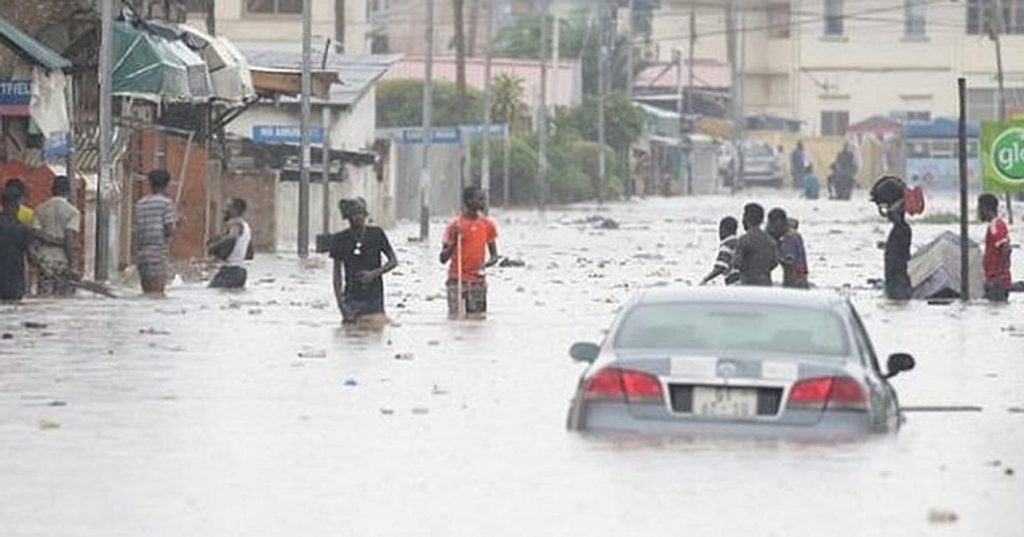
Nurture Nature Foundation is urging government, metropolitan and municipal assemblies, development partners, private institutions and citizens to embrace a blue-green approach to flood management in Greater Accra.
The foundation argues that recurrent flooding can no longer be treated solely as a sanitation challenge. Instead, it should be addressed as a critical issue of climate adaptation, urban planning, environmental protection, public safety and infrastructure development.
At the centre of its proposal is the Accra Blue and Green Flood Resilience and Inland Water Transport Integration Initiative, which outlines a 36-month preparation and pilot phase, followed by a long-term programme of public investment. The initiative advocates a shift from reliance on conventional drainage systems toward a more integrated approach that slows, stores, filters and safely channels rainwater before it becomes destructive.
“Accra cannot continue to wait for floods to destroy homes and livelihoods before action is taken,” said Peter Asiedu, Executive Director of Nurture Nature Foundation. “We are advocating a system that manages water from the household compound to the wetland, the drain, the lagoon and the coast.”
Why flooding persists
According to the foundation, flooding in Accra stems from a combination of environmental and human-induced factors. Intense rainfall generates large volumes of water within short periods, while extensive urban development has replaced natural ground surfaces with roads, paved compounds and buildings that prevent water from infiltrating the soil.
As a result, rainwater flows rapidly into drains and low-lying communities, increasing the risk of flooding.
The situation has been exacerbated by the degradation of wetlands, lagoons and natural waterways, many of which have been encroached upon, polluted or reclaimed for construction. In some areas, buildings have been erected within drainage corridors, restricting the natural movement of water.
Poor waste management further compounds the problem. Plastic waste and other refuse often block neighbourhood drains before being washed into larger stormwater channels, lagoons and the sea. Sedimentation also reduces drainage capacity, as soil and sand from construction sites, exposed land and upstream catchments accumulate in drains and waterways over time.
Beyond conventional drains
While acknowledging the importance of large drainage systems, the foundation maintains that drains alone cannot provide a sustainable solution.
“When large volumes of runoff arrive simultaneously, even well-maintained drains can be overwhelmed,” the foundation noted.
Current interventions are often reactive, focusing on clearing blocked drains after flooding has occurred or cleaning beaches after waste has already entered waterways and coastal areas. The foundation argues that greater emphasis should be placed on prevention.
This includes intercepting waste before it enters major channels, controlling sediment before it accumulates in drains and lagoons, and retaining stormwater in designated areas to reduce pressure on vulnerable communities.
The blue-green solution
The proposed strategy combines conventional water infrastructure with nature-based solutions.
The “blue” component includes drains, rivers, lagoons, canals, retention basins, water storage areas and coastal buffers. The “green” component encompasses wetlands, trees, parks, permeable surfaces, rain gardens and other landscape features that allow water to infiltrate the soil.
Together, these systems can reduce the burden on drainage infrastructure. Retention basins, for example, can temporarily store stormwater and release it gradually after heavy rainfall, while restored wetlands can absorb excess water, support biodiversity and enhance environmental quality.
Vegetation also plays a critical role by reducing soil erosion and preventing sediment from entering drainage systems. Trees and green spaces further improve air quality, provide shade and help moderate urban temperatures.
Wetlands as essential infrastructure
A key pillar of the foundation’s proposal is the protection and restoration of wetlands and lagoons, which it describes as natural climate infrastructure.
These ecosystems act as natural reservoirs, receiving, storing and slowly releasing excess water. However, many have been degraded by pollution, unregulated development and settlement expansion.
“When wetlands are filled or obstructed, water that would otherwise be absorbed is redirected toward homes, roads and businesses,” the foundation cautioned.
It is, therefore, calling on government agencies and assemblies to strengthen the protection of wetlands and drainage reservations through proper mapping, enforcement of development regulations and public education.
The foundation also emphasises the need for community involvement, arguing that residents must better understand the role wetlands play in reducing flood risks.
Retaining water before disaster strikes
Another major recommendation is the creation of designated stormwater retention areas, including detention ponds, retention basins, vegetated channels and restored wetland zones.
These facilities would reduce the speed and volume of runoff entering major drains, lowering flood peaks and allowing drainage systems to function more effectively.
However, the foundation stresses that such interventions must be guided by rigorous scientific studies and professional expertise.
It is advocating feasibility studies, environmental assessments, community consultations and carefully monitored pilot projects before any large-scale implementation is undertaken.
Promoting household responsibility
The foundation believes flood resilience must extend beyond government-led projects.
It notes that extensive paving and cementing of residential and commercial compounds have significantly reduced the amount of land available for natural water absorption.
To address this, it proposes discussions around municipal policies that would encourage households, institutions and developers to maintain at least 25 percent of their properties as green or permeable space, where conditions permit.
Such areas could include lawns, gardens, trees, gravel surfaces or rain gardens. The foundation emphasises that any policy should be introduced gradually and supported by public education rather than punitive enforcement.
It also recommends that new developments incorporate stormwater management plans as part of the approval process, particularly for large residential estates, shopping centres and institutional facilities.
Building partnerships for resilience
The foundation acknowledges that transforming Accra’s flood management system will require collaboration across multiple sectors.
Government agencies would provide policy direction and regulatory oversight, while engineers, researchers and urban planners would guide technical design and implementation.
Communities would play a role in maintenance and local stewardship, while businesses and development partners could support financing, equipment procurement, greening initiatives and employment opportunities.
Nurture Nature Foundation says it intends to contribute through advocacy, community mobilisation and stakeholder engagement, building on its experience in sanitation and environmental initiatives.
Conclusion
The foundation maintains that while rainfall cannot be prevented, the devastation caused by poorly managed stormwater can be significantly reduced.
Achieving this, it argues, will require a shift from a culture of emergency response to one of long-term resilience. Protecting wetlands, reducing waste, managing sediment, creating retention areas and expanding green spaces must become central components of urban development planning.
By integrating conventional infrastructure with natural systems, the foundation believes Accra can better withstand the growing risks posed by climate change and rapid urbanisation.
It is, therefore, calling on national and local authorities, development partners, businesses and citizens to support the Accra Blue and Green Flood Resilience Initiative, arguing that the cost of prevention is far lower than the economic losses, social disruption and human suffering caused by repeated flooding.
Source: B&FT Online