
Nurture Nature Foundation is advocating a community-centered approach to flood resilience in Greater Accra, arguing that organised waste management, routine drain maintenance and sediment control must complement investments in flood infrastructure.
The foundation believes engineering solutions alone cannot provide lasting protection unless residents living around drains, wetlands, lagoons and other flood-prone areas play an active role in safeguarding and maintaining them.
A drain cleared today can quickly become blocked if indiscriminate waste disposal continues. Similarly, retention basins lose capacity when sediment and refuse accumulate, while protected wetlands remain vulnerable without community awareness of their environmental importance.
Peter Asiedu, Executive Director of Nurture Nature Foundation, said lasting flood resilience requires continuous community involvement rather than periodic clean-up exercises.
“Community participation must go beyond occasional clean-up exercises. We are advocating permanent local maintenance teams that are trained, equipped, supervised and fairly compensated to maintain drains, waste traps, beaches and waterways throughout the year,” he said.
Tackling waste at its source
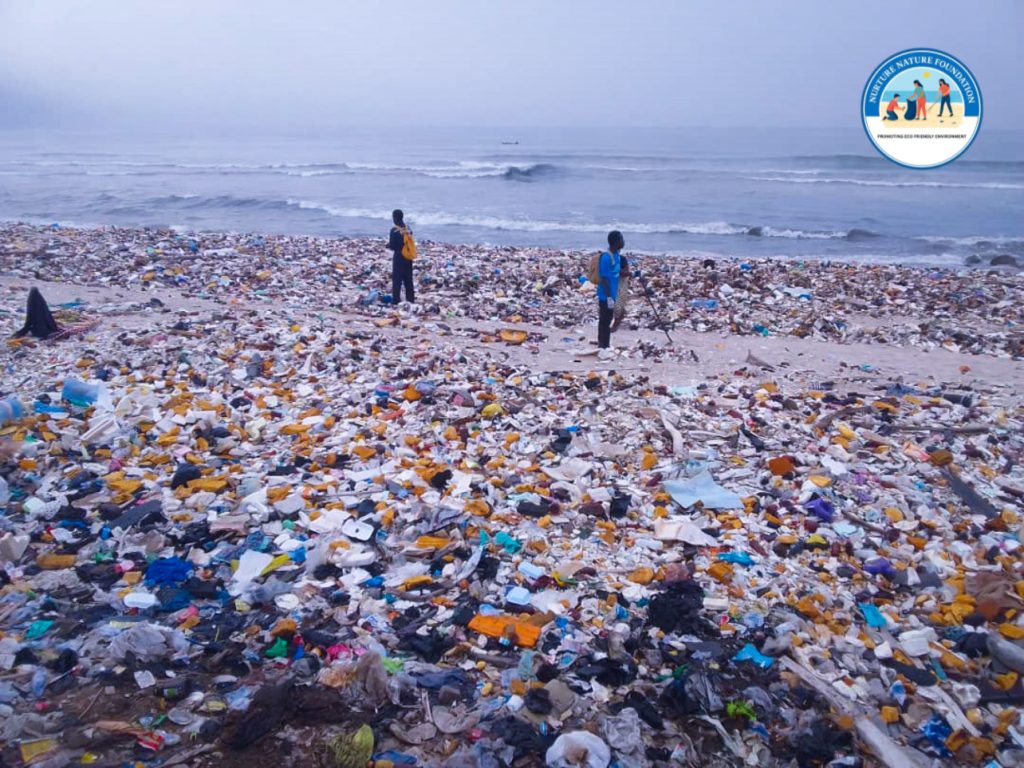
The foundation notes that much of the waste found on Accra’s beaches originates inland. Refuse discarded in residential communities, markets, transport terminals and commercial areas is washed into drains during rainfall before flowing through larger waterways and channels into lagoons, estuaries and eventually the sea.
Blocked drains and polluted beaches are therefore symptoms of the same environmental challenge. Cleaning the coastline without preventing waste from entering drainage systems upstream offers only a temporary solution.
To address this, the foundation proposes piloting community drainage filter traps at strategic locations to intercept plastics and other debris before they enter major stormwater channels. The traps would be designed for safe, routine maintenance by trained local teams.
However, the foundation stresses that waste traps should complement—not replace—responsible waste management. Public education, reliable refuse collection, accessible disposal facilities and stronger enforcement against illegal dumping remain essential to reducing the volume of waste entering drainage systems.
Making maintenance routine
The foundation argues that flood infrastructure should be maintained through planned, year-round programmes rather than emergency interventions after heavy rainfall.
Drains accumulate waste and sediment throughout the year, vegetation encroaches on waterways and infrastructure gradually deteriorates. Without regular inspections, relatively minor defects can quickly develop into major flood risks.
It therefore advocates dedicated community maintenance teams to inspect drains, remove debris from waste traps, report damaged infrastructure and identify potential hazards before the onset of the rainy season.
Digital technology could further improve the system. Using mobile devices, field teams could photograph blocked drains, record locations and submit reports to municipal authorities, enabling assemblies to prioritise desilting, waste collection and repairs more effectively.
Such an approach would also strengthen accountability by clearly assigning maintenance responsibilities, monitoring completed work, and ensuring reported defects are addressed promptly.
Creating dignified green jobs through environmental work
Ghana’s growing youth population presents both a challenge and an opportunity.
While many young people seek employment, communities require skilled personnel to maintain drains, manage waste, restore vegetation, monitor water levels and support environmental education.
Nurture Nature Foundation’s proposed youth green jobs initiative seeks to address both needs by training and deploying young people as community maintenance workers, sanitation educators, data collectors, recycling assistants, landscapers and environmental monitors.
However, these roles must be treated as formal work rather than temporary labour for occasional clean-up campaigns. Participants should receive appropriate training, supervision, protective equipment, fair compensation and insurance where possible.
Workers must also be protected from the risks associated with drainage and sanitation activities, including exposure to polluted water, sharp objects, medical waste, unstable ground and hazardous weather conditions. Safety training should cover hazard identification, first aid, personal hygiene, safe lifting techniques and emergency procedures.
No team should operate in dangerous conditions without proper protective gear, supervision and clear evacuation arrangements. Environmental work should receive the same level of safety consideration as other essential public services.
Managing sediment and restoring ecosystems
While plastic waste attracts significant attention because of its visibility, sediment build-up is another major threat to drainage systems. Soil and sand from unpaved roads, construction sites, eroded land and upstream areas can accumulate in drains, reducing their capacity and increasing maintenance costs.
A sustainable approach must combine removal with prevention. Sand traps can help capture sediment before it reaches major drainage channels, while construction sites should adopt measures to control soil movement.
Communities can also reduce erosion through improved land management, vegetation cover and sustainable farming practices.
Removed sediment should be assessed before reuse. Suitable material may support landscaping and community projects, while contaminated waste must be handled and disposed of safely.
Flood resilience in Accra also depends on activities beyond the city centre. Water and sediment move through entire catchment areas, meaning land degradation and erosion upstream can contribute to flooding downstream.
The foundation therefore supports conservation farming and vegetation restoration, including tree planting, grass barriers and responsible land management practices. These measures can reduce runoff, protect soil, improve biodiversity and create additional livelihood opportunities through community nurseries, landscaping and seedling production.
Building genuine community ownership
Long-term flood resilience requires communities to be involved from the planning stage rather than consulted only after decisions have been made.
Residents often possess valuable knowledge about drainage patterns, recurring flood points and local vulnerabilities. Market traders, fisherfolk, transport operators, landlords, tenants and traditional leaders can provide insights that improve project design and implementation.
Consultation should be transparent, allowing communities to raise concerns about safety, access, land use and maintenance responsibilities. Clear grievance mechanisms should also be established to address complaints and build trust.
Ensuring inclusion in flood resilience efforts
Flooding does not affect all groups equally. Women traders may lose income and goods, children may struggle to access schools, while persons with disabilities and older residents may face greater difficulties during emergencies.
Flood resilience planning should therefore include women’s groups, disability organisations, schools and health workers.
Employment opportunities must also be inclusive, with roles available in areas such as public education, data collection, recycling, administration and environmental monitoring.
Transparent recruitment processes and community oversight will be essential to ensure that opportunities benefit residents fairly.
Education, services and sustainable financing
Infrastructure alone cannot solve flooding if public behaviour remains unchanged. Residents must understand the consequences of dumping waste into drains, building on waterways and increasing surface runoff through excessive paving.
Public education should be integrated into schools, markets, religious institutions, transport centres and community programmes. However, awareness campaigns must be supported by reliable waste collection services and accessible disposal facilities.
A major challenge facing public projects is the lack of long-term maintenance funding. Sustainable flood management requires regular financing for inspections, waste collection, equipment replacement, worker compensation and minor repairs.
Municipal assemblies should incorporate these costs into their budgets, while private sector organisations, recycling companies and development partners can provide additional support through targeted partnerships.
External support should complement, rather than replace, government responsibility. Community maintenance must ultimately become part of routine municipal service delivery.
Conclusion
Accra’s flood resilience cannot be achieved through infrastructure development alone. The city needs informed communities, trained maintenance teams and responsive institutions working together.
Nurture Nature Foundation’s approach places waste management, sediment control, ecosystem restoration and youth employment at the centre of urban resilience. With sustained commitment, environmental maintenance can move beyond occasional clean-up exercises to become a reliable public service that protects lives, supports livelihoods and prepares communities for a changing climate.